
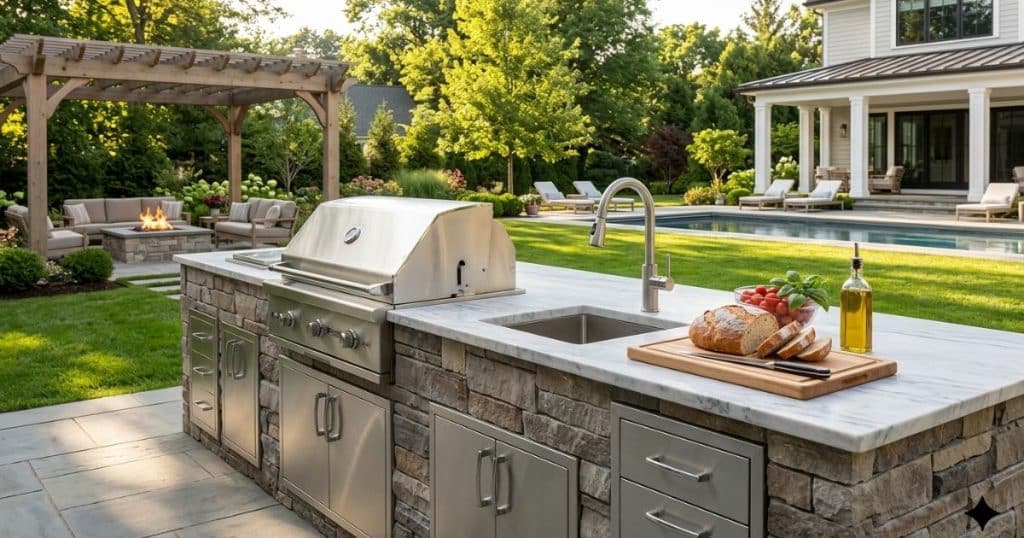
An outdoor kitchen can look beautiful on installation day. The real test comes months and years later, after the countertop has spent long afternoons in direct sun, handled hot cookware, dealt with spills, and gone through wet and dry weather. That is why choosing outdoor kitchen countertops should start with how the space will actually be used.
A covered patio in San Jose has different demands from an uncovered counter beside a pool. A prep surface several feet from the grill experiences different heat than the countertop immediately surrounding cooking equipment. Before choosing a slab based only on color or pattern, consider its exposure to heat, sunlight, moisture, and changing weather, as well as its maintenance and fabrication requirements. For Bay Area outdoor kitchens, outdoor-rated porcelain is generally the best option. Certain quartzites may also be suitable, but the selected slab should be discussed with the fabricator before installation.
Start With the Conditions Around Your Outdoor Kitchen
There is no single countertop that is automatically right for every backyard. First, consider how much direct sunlight reaches the space. Then look at whether rain can reach the countertop, whether the kitchen sits beside a pool, and how close the surface will be to a grill, pizza oven, burner, or other heat source. It also helps to think about daily use.
If the countertop will regularly handle cooking oil, sauces, wine, citrus, and outdoor entertaining, stain resistance and cleaning needs become important. If the kitchen is used only occasionally and stays covered, your priorities may be different. Marblus Granite and Tile, Inc. works with a wide selection of natural stone surfaces, porcelain slabs, and custom fabrication options for San Jose and Bay Area projects. Looking at the complete installation before selecting a material helps avoid choosing a beautiful slab that is poorly matched to the environment.
Why Quartzite May Work Outdoors
Quartzite is a durable natural stone that may be considered for certain outdoor kitchen countertops. It offers strong resistance to everyday wear and scratching while providing natural colors and patterns that complement landscaped outdoor spaces. Its appearance can also bring warmth and character to an outdoor cooking and entertaining area.
However, quartzite slabs vary in composition and performance. Some stones sold under the quartzite label may have different absorption, porosity, or care requirements. For that reason, homeowners should not assume that every quartzite slab is automatically suitable for outdoor use. The exact slab, finish, exposure, and installation conditions should be reviewed with an experienced fabricator before a final decision is made.
Quartzite Requires Project-Specific Guidance
Natural stone is not maintenance-free. Depending on the selected quartzite, an appropriate sealer may be recommended to help reduce staining from cooking oil, wine, sauces, or other materials commonly used around an outdoor kitchen. The need for sealing and the recommended schedule can vary based on the stone, finish, exposure, and sealer.
Outdoor countertops also require thoughtful fabrication around sinks, grills, and appliance openings. Narrow sections, unsupported overhangs, and poorly planned cutouts can become vulnerable regardless of the strength of the material. The fabricator should evaluate the slab and installation together, including exposure to sunlight and moisture, proximity to heat sources, support requirements, and long-term care.
Why Porcelain Is the Best Choice Outdoors
Outdoor-rated porcelain is generally the best choice for outdoor kitchen countertops because it offers reliable performance with relatively low maintenance. It is nonporous and highly resistant to moisture, stains, UV exposure, and heat. Many manufacturers also produce porcelain surfaces specifically approved for indoor and outdoor applications.
This combination makes porcelain especially useful in areas exposed to strong Bay Area sunlight, rain, pool water, food spills, and changing weather. Unlike some materials that may change appearance after prolonged sun exposure, properly specified outdoor porcelain is designed to maintain its color and finish. Marblus recommends porcelain slabs for outdoor settings because of their resistance to moisture, heat, water, stains, and everyday use.
Porcelain Offers a Different Design Advantage
Porcelain gives homeowners greater control over appearance. It can resemble marble, limestone, concrete, or other natural materials while maintaining the performance benefits of porcelain. This can be especially helpful when you want the visual movement of natural stone but prefer a surface that is easier to maintain outdoors.
Large-format slabs can also create a clean, contemporary look with fewer visual interruptions. However, porcelain fabrication requires experience. Large slabs may be thinner than traditional natural stone, so edges, cutouts, support, transport, and installation must be handled correctly. Choosing porcelain should not stop at selecting a pattern. The slab thickness and installation details must also match the outdoor kitchen design.
Quartzite or Porcelain: Which Is Better Outdoors?
For most outdoor countertop projects, outdoor-rated porcelain is the preferred option because of its low absorption, UV resistance, stain resistance, heat resistance, and minimal sealing concerns. It is particularly well suited to uncovered kitchens and areas regularly exposed to moisture or strong sunlight.
Quartzite may be considered when the homeowner prefers genuine natural stone and its distinctive mineral patterns. However, suitability depends on the specific slab and installation conditions. Before selecting quartzite, consult the fabricator about the stone’s characteristics, sealing requirements, location, expected exposure, and proximity to cooking appliances. The decision should be based on the actual material and project, not simply the name of the stone.
Check Heat Exposure Before Finalizing the Layout
Heat-resistant countertops still require good planning. The area immediately beside a grill can experience more concentrated heat than a serving counter several feet away. Built-in cooking equipment also has manufacturer clearance and ventilation requirements that must be followed. A countertop should never be used as a substitute for proper appliance installation.
With quartzite, the fabricator should confirm whether the selected slab and finish are appropriate for the expected heat exposure. With porcelain, the slab may be highly heat resistant, but installation materials, cabinetry, seams, and nearby components must also be considered. The countertop is only one part of the system. Planning appliance openings, seams, supports, and overhangs before fabrication helps the finished kitchen perform better.
Think About Sun and Color
San Jose and surrounding Bay Area communities receive plenty of strong sunlight, which matters when choosing an outdoor surface. Dark countertops can become noticeably hotter in direct sun. Lighter surfaces may stay more comfortable to touch, although any material can heat up after prolonged exposure. UV resistance is particularly important when a countertop is completely uncovered.
Outdoor-rated porcelain is designed with UV exposure in mind, making it the most dependable choice for many sun-exposed kitchens. Certain quartzites may also be suitable, but the selected slab should be assessed by the fabricator for the planned location. Do not choose based only on a small indoor sample. View the slab or sample in natural daylight whenever possible because colors and finishes may look different outdoors than they do under showroom lighting.
Do Not Ignore Moisture and Staining
An outdoor kitchen sees different messes than an indoor countertop. Rainwater, pollen, dust, food oils, barbecue sauce, wine, leaves, and pool water can all reach the surface. Porcelain’s low absorption makes cleanup relatively straightforward and helps explain why it is the preferred material for many outdoor installations.
Quartzite may also perform well in certain settings, but its porosity and sealing needs depend on the particular slab. Regardless of the material, spills should not be left indefinitely simply because the surface is described as stain-resistant. Regular cleaning with products approved for the material helps protect the finish and keeps an outdoor kitchen looking better over time.
Why Fabrication Matters as Much as Material
A premium slab can still disappoint if it is poorly fabricated. Outdoor kitchen countertops often require openings for grills, sinks, refrigerators, trash systems, burners, and other equipment. Those cutouts change how stress moves through the slab. Proper support becomes especially important around corners, narrow sections, and overhangs.
Pattern layout matters as well. With natural quartzite, experienced fabrication can position attractive areas of the slab where they will be most visible. With porcelain, precise cutting and handling are especially important because of the material’s characteristics. Marblus Granite and Tile, Inc. operates a full-service fabrication shop and handles templating, layout, cutting, detailing, and installation for custom Bay Area countertop projects.
What Happens When the Wrong Surface Is Chosen?
Problems often appear slowly. A surface poorly suited to strong sunlight may begin to change in appearance. A material that absorbs moisture easily may require more maintenance than expected. Poor heat planning can contribute to damage near cooking equipment. Improper support can eventually lead to cracking around cutouts or overhangs.
These problems are easier to prevent during planning than to correct after the kitchen is finished. The material decision should account for the exact slab, location, cooking equipment, exposure, maintenance expectations, and fabrication details. Do not assume that a countertop material that performs well indoors will automatically be appropriate outdoors. Exterior use introduces different requirements.
Frequently Asked Questions
Is Quartzite Good for an Outdoor Kitchen Countertop?
Certain quartzites may be suitable for outdoor countertops, but performance varies by slab. Discuss the specific quartzite, finish, sealing requirements, sunlight and moisture exposure, and installation details with the fabricator before making a final selection.
Is Porcelain Better Than Quartzite Outdoors?
Outdoor-rated porcelain is generally the better option because it offers excellent resistance to UV exposure, moisture, stains, and heat with relatively low maintenance. Quartzite may work in some installations, but its suitability must be evaluated based on the exact slab and project conditions.
Can I Put a Hot Pan on an Outdoor Countertop?
Even when a countertop material is heat resistant, using a trivet is recommended. Concentrated heat and sudden temperature changes can affect the countertop, seams, installation materials, cabinetry, or nearby components.
Does Porcelain Fade in Direct Sunlight?
Outdoor-rated porcelain is designed to resist UV exposure and is widely used for exterior applications. Always confirm that the specific porcelain product selected is approved by its manufacturer for outdoor use.
Does Outdoor Quartzite Need Sealing?
Some quartzites may benefit from an appropriate sealer to improve stain resistance, while others may have different care requirements. The need for sealing and its frequency depend on the specific stone, finish, exposure, and product used. Ask the fabricator for guidance based on the selected slab.
What Is the Best Countertop Around an Outdoor Grill?
Outdoor-rated porcelain is generally the best choice because it offers strong resistance to heat, UV exposure, moisture, and stains. The final installation must still follow appliance clearances and include proper ventilation, slab support, seams, and fabrication details. Certain quartzites may also be considered after consultation with the fabricator.
Build an Outdoor Kitchen Around the Right Surface
Your outdoor countertop should do more than look good when the project is finished. Marblus Granite and Tile, Inc. can help you compare outdoor-rated porcelain and suitable quartzite options based on your cooking setup, sunlight and moisture exposure, maintenance preferences, and the way your Bay Area outdoor kitchen will actually be used. Porcelain is generally the best outdoor choice, while any quartzite selection should be reviewed with the fabricator before installation. From slab selection and templating to precise fabrication and installation, the San Jose team can help create a surface that brings together durability, performance, and the design you want.