
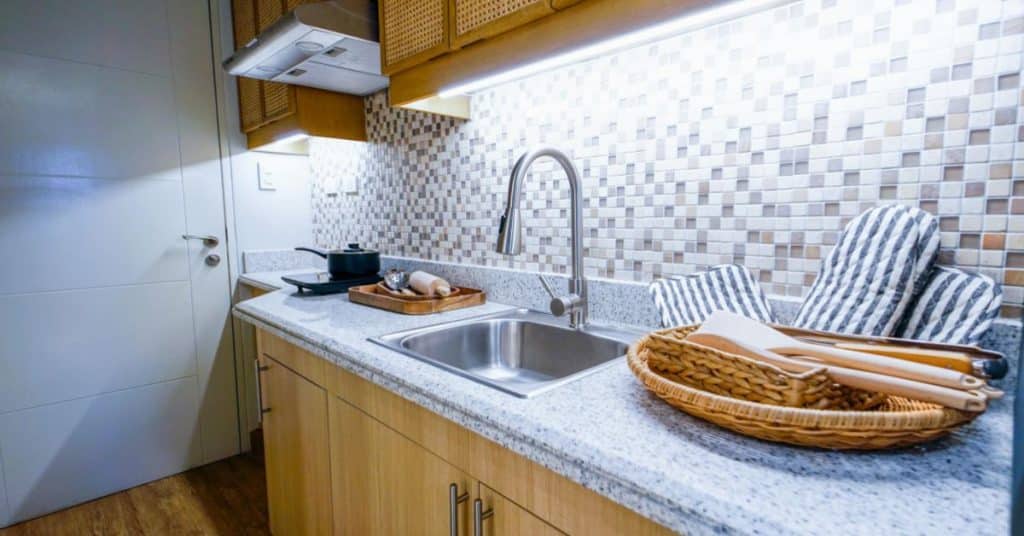
A backsplash may cover a relatively small area of your kitchen, but it can shape the entire look of the room. The wrong pattern can compete with your countertops, make the space feel crowded, or create a disconnected design. The right backsplash brings the cabinets, counters, flooring, and fixtures together.
At Marblus Granite and Tile, Inc., we help Bay Area homeowners select materials and patterns that feel intentional rather than overwhelming. From marble mosaics and granite accents to smooth finishes and detailed tile inlays, natural stone offers almost endless ways to add character to a kitchen. Our goal is not simply to choose a beautiful tile. We consider how its color, scale, finish, and movement will work with everything around it.
What Makes a Natural Stone Backsplash Unique?
A natural stone backsplash contains variations that manufactured materials often try to imitate. Veining, mineral deposits, shade differences, and subtle changes in texture make every installation feel distinctive.
Popular natural stone backsplash materials include:
- Marble for soft veining and an elegant appearance
- Granite for rich color variation and visual depth
- Limestone for a warm, understated surface
- Travertine for natural movement and a relaxed look
- Stone mosaics for customized patterns and borders
These materials can be installed alone or combined with porcelain, ceramic, glass, or metal accents. Marblus Granite and Tile, Inc. specializes in backsplashes, kitchens, natural stone fabrication, and intricate tile inlays for residential and commercial projects.
How Do You Choose a Backsplash Pattern?
The right pattern depends on how much movement already exists in the kitchen. If your countertop has bold veins, dramatic color shifts, or a busy mineral pattern, a simple backsplash layout usually creates better balance. Subway tiles, rectangular stone pieces, or large-format tiles allow the countertop to remain the main feature.
When the countertop is quieter, the backsplash can take on a stronger visual role. A herringbone, chevron, basketweave, arabesque, or geometric mosaic can add movement without requiring a bold color.
Before selecting a pattern, consider:
- The size of the kitchen
- The amount of natural light
- The countertop’s pattern
- Cabinet color and door style
- Grout color
- The height of the backsplash
- The location of outlets, windows, and appliances
Pattern scale also matters. Small mosaics can add detail, but too many grout lines may make a compact kitchen feel visually crowded. Larger tiles can create a calmer, more continuous appearance.
Which Marble Backsplash Patterns Work Well?
Marble remains a popular backsplash material because its veining adds movement without relying on printed designs. It can feel traditional, contemporary, or transitional depending on the tile shape and finish.
Marble Subway Tile
A marble subway backsplash is clean and flexible. A traditional horizontal layout feels familiar, while a vertical stack or offset pattern can give the same material a more current appearance.
Herringbone Marble
Herringbone creates direction and visual energy. It works especially well behind a range, inside a framed feature area, or across a backsplash with limited competing patterns.
Marble Mosaic
Hexagons, penny rounds, basketweave patterns, and geometric marble mosaics add detail to a neutral kitchen. They can also introduce several related shades without making the design feel overly colorful.
When coordinating marble with countertops, look beyond the base color. Compare the stone’s warm or cool undertones, vein color, finish, and overall level of movement. Homeowners can explore additional material characteristics on our marble selection page.
Can Granite Be Used for a Backsplash?
Yes. Granite can be used as tile, a decorative accent, or a full-height slab backsplash.
A granite backsplash can create continuity when paired with matching granite countertops. Extending the same slab from the countertop up the wall creates fewer grout lines and lets the natural pattern flow across a larger area.
Granite can also be used more selectively. Small granite pieces may appear in:
- Mosaic borders
- Framed range designs
- Diamond-shaped accents
- Mixed-material tile inlays
- Decorative corner pieces
- Transition strips between tile patterns
When using different granite materials for the countertop and backsplash, one should usually be the visually quieter one. Two highly active patterns can compete for attention.
Our guide on coordinating backsplashes with granite countertops explains how color, contrast, texture, and finish can help create a more cohesive kitchen.
How Can Tile Inlays Personalize a Backsplash?
A tile inlay is a decorative pattern placed within a larger field of tile. It allows homeowners to create a focal point without using a detailed pattern across the entire kitchen.
Common locations for tile inlays include:
- Behind the cooking range
- Above a sink
- Inside a backsplash niche
- Between open shelves
- Along a horizontal border
- At the center of a beverage or coffee station
An inlay may combine marble, granite, porcelain, glass, or metal. For example, a marble field tile may be framed with a darker granite border. A stone backsplash may include a narrow metallic accent. A simple subway pattern may feature a mosaic panel behind the range.
At Marblus Granite and Tile, Inc., we approach tile inlays as part of the complete design. The border thickness, pattern alignment, grout spacing, and relationship to nearby cabinets all affect whether the finished feature looks integrated or added as an afterthought.
Which Natural Stone and Tile Combinations Work Together?
Mixing materials can make a backsplash feel layered and custom, but the combination should have a clear connection.
Marble and Porcelain
Porcelain can provide a calm background while a marble mosaic creates a focal area. This combination works well when homeowners want natural variation without using marble across the entire wall.
Granite and Glass
Glass can reflect light and soften the visual weight of dark granite. Choose a glass color that appears naturally within the granite rather than introducing an unrelated shade.
Stone and Metal
Stone pairs naturally with bronze, copper, stainless steel, and dark metal details. A narrow metal accent can highlight the stone’s texture without overpowering it.
Marble and Granite
Marble and granite can work together when their undertones relate. One material should usually be simpler so the two stones do not compete.
Natural Stone and Ceramic Tile
Ceramic field tile can create a practical, restrained foundation. Natural stone borders or inlays can then bring variation and craftsmanship into selected areas.
Should the Backsplash Match the Countertop?
A backsplash does not need to match the countertop exactly. It should coordinate with it.
Start by identifying one or two details from the countertop, such as:
- A secondary vein color
- A warm or cool undertone
- A small mineral fleck
- The countertop finish
- The overall level of contrast
The backsplash can repeat one of these details without copying the countertop pattern. This approach creates a connection while allowing each surface to have its own role.
A darker backsplash can also work with a lighter countertop when the cabinetry, flooring, or hardware helps distribute the darker color throughout the room.
Why Does Professional Layout Matter?
Natural stone installation involves more than placing tiles in rows. Vein direction, color variation, cuts, grout joints, corners, outlets, and focal areas must be planned before installation begins.
A thoughtful layout can help:
- Keep the pattern centered behind a range
- Prevent awkward slivers near cabinets
- Distribute natural color variation evenly
- Align borders and decorative inlays
- Maintain consistent grout spacing
- Create cleaner transitions at corners
- Reduce visual interruptions around outlets
Marblus Granite and Tile, Inc. operates a full-service fabrication shop and assists clients with design, material selection, sourcing, fabrication, and installation. Our family-owned business has served San Jose and the Bay Area since 2005.
Homeowners can also browse our project gallery for inspiration before selecting a backsplash direction.
Frequently Asked Questions
1. What is the most timeless natural stone backsplash pattern?
A simple subway, stacked rectangular, or large-format layout tends to remain versatile because it does not rely heavily on short-term trends. Natural variation in the stone keeps the surface interesting.
2. Can I mix marble and granite in one kitchen?
Yes. Marble and granite can work together when their colors or undertones relate. To maintain balance, use one material as the main feature and let the other play a quieter supporting role.
3. Should backsplash grout match the tile?
Matching grout creates a more continuous surface, while contrasting grout emphasizes the tile shape and pattern. The right choice depends on how much visual detail you want the backsplash to have.
4. Where should a decorative tile inlay be placed?
The area behind the range is one of the most common locations because it creates a natural focal point. Inlays can also work above sinks, inside niches, or between open shelves.
5. How do I avoid choosing a backsplash that looks too busy?
Begin by studying the countertop. If it has strong veining or several colors, choose a simpler tile and layout. Save detailed patterns for a smaller feature area rather than covering every wall.
Bring Your Natural Stone Backsplash Ideas to Life
A successful backsplash should feel connected to your kitchen while still adding its own texture, movement, and personality. The right combination may be a quiet marble subway tile, a full-height granite surface, an earthy stone pattern, or a detailed inlay created from several coordinated materials.
At Marblus Granite and Tile, Inc., we help homeowners throughout San Jose and the Bay Area make informed material and design choices. We consider the complete room, carefully plan the layout, and use our fabrication and tile-setting experience to create a backsplash that feels purposeful.
Schedule a design consultation with Marblus Granite and Tile, Inc. today.